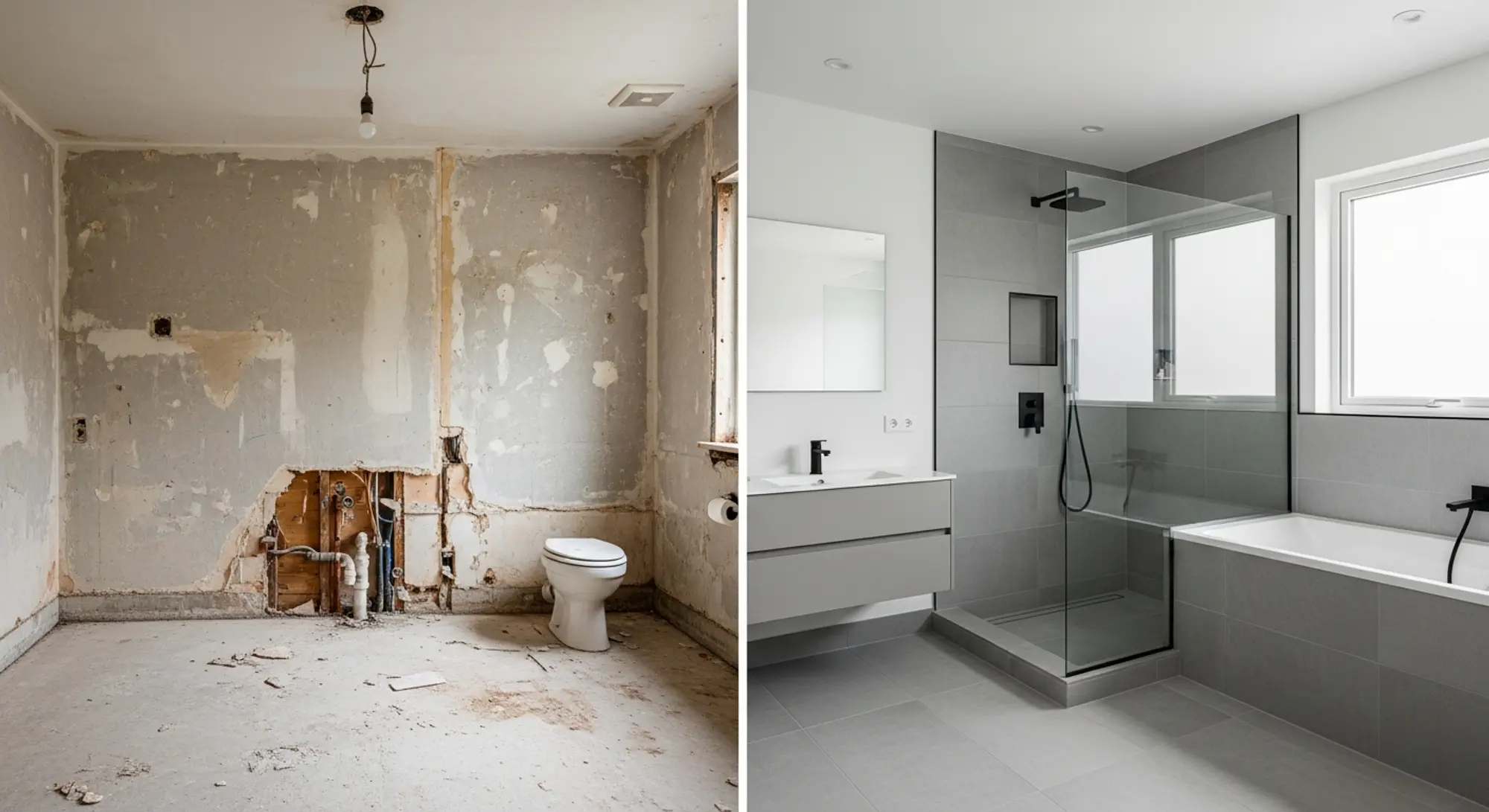
"How long will my bathroom be out of commission?" It's the first question almost every homeowner asks — and for good reason. According to the 2025 U.S. Houzz Bathroom Trends Study, 84% of homeowners hire professionals for bathroom renovations, but most don't have a clear picture of how long the project will actually take until they're already committed. The short answer: most bathroom remodels take 3 to 8 weeks of active construction, but the full project timeline from first design meeting to final walkthrough typically runs 2 to 5 months.
After 358+ bathroom projects across Roseville, Sacramento, Folsom, Granite Bay, and the greater Sacramento region, we've learned that realistic expectations are the single biggest factor in homeowner satisfaction. This guide breaks down every phase — pre-construction, construction week by week, and post-construction — with honest timelines for both DIY and professional approaches. You'll also get a planning checklist that covers every decision you need to make before demo day.
TL;DR: A bathroom remodel takes 3-8 weeks of construction (1-2 weeks for a powder room, 3-5 weeks for a guest bath, 5-8 weeks for a master, 8-14 weeks for a full gut). But total project time — including design, permits, and material ordering — is typically 2-5 months. The biggest timeline factors: material lead times (custom vanities need 6-12 weeks), permit processing (2-6 weeks in Sacramento), and hidden damage behind walls (affects 40-60% of projects). DIY adds 2-4x to every phase.
How Long Does Each Type of Bathroom Remodel Take?
A 2024 Houzz study found that homeowners spend roughly twice as much time planning as they do on actual construction — which means the "real" timeline is much longer than most people think. Here's a breakdown by project scope, with both construction-only and total project timelines.
Quick-Answer Timeline by Project Type
- Powder room refresh: 1-2 weeks construction | 4-6 weeks total. Vanity swap, mirror, light fixture, paint, possibly new flooring. No plumbing relocation.
- Small full bathroom (cosmetic update): 2-3 weeks construction | 6-10 weeks total. New fixtures, resurfaced or replaced tub, updated tile, fresh paint. Plumbing stays in place.
- Standard guest bathroom remodel: 3-5 weeks construction | 2-3 months total. Tub-to-shower conversion or tub replacement, new tile, vanity, toilet, and fixtures.
- Master bathroom remodel: 5-8 weeks construction | 3-5 months total. Walk-in shower, double vanity, new flooring, custom tile work, updated lighting and ventilation.
- Full gut renovation: 8-14 weeks construction | 4-7 months total. Complete layout change, plumbing relocation, possible wall removal, custom everything.
DIY vs. Professional: How Timelines Compare
DIY bathroom remodels typically take 2 to 4 times longer than professional projects. A guest bathroom that takes a contractor's crew 4 weeks might take a skilled DIYer 8-12 weeks working evenings and weekends. The difference isn't just skill — it's the number of workers, specialized tools, trade coordination, and the ability to work full days.
- Powder room (DIY): 3-6 weeks vs. 1-2 weeks with a pro. Manageable for experienced DIYers.
- Guest bathroom (DIY): 8-16 weeks vs. 3-5 weeks with a pro. Plumbing and tile work slow DIYers significantly.
- Master bathroom (DIY): 4-8 months vs. 5-8 weeks with a pro. Multiple trades make this extremely challenging for DIY.
- Full gut (DIY): 6-12+ months vs. 8-14 weeks with a pro. Not recommended for DIY — requires licensed plumbing, electrical, and structural work.
For a detailed cost comparison across these project types, check our 2026 Sacramento bathroom remodel cost guide.
What Happens During Pre-Construction?

Pre-construction is the phase most homeowners underestimate. It takes 2-8 weeks before any demolition happens — and cutting this phase short is one of the most common causes of mid-project delays and budget overruns.
Design and Planning (1-3 Weeks)
Everything starts with an in-home consultation: measuring the space, discussing your goals, identifying structural constraints, and reviewing your budget. For Sacramento-area homes — especially the ranch-style and split-level homes built in the 1970s through 1990s — we're also checking for outdated galvanized plumbing, polybutylene pipes, and older electrical panels that might need upgrading during the remodel.
During this phase, you'll finalize the layout, select materials, choose fixtures, and approve a design. We create 3D renderings so you can visualize the finished space before committing. Most homeowners need 2-3 meetings over 1-3 weeks to make final decisions.
Budgeting and Contingency (During Planning)
Sacramento-area bathroom remodels typically range from $12,000 for a basic guest bath to $75,000+ for a full master suite renovation. We recommend setting aside a 10-15% contingency fund for surprises behind the walls. A 2024 Clever Real Estate survey found that 78% of homeowners exceeded their renovation budget — 35% by more than $10,000. A contingency fund and a fixed-price proposal are your best protection.
Hiring and Vetting Contractors (1-3 Weeks)
Getting bids, checking references, verifying licenses, and signing a contract takes 1-3 weeks — and shouldn't be rushed. In California, every contractor working on projects over $500 must hold a valid CSLB license. Verify licenses at the Contractors State License Board website. Our guide on choosing a bathroom remodel contractor covers the full vetting checklist.
Pulling Permits (2-6 Weeks)
Permits are the number-one pre-construction delay. Any bathroom remodel involving plumbing changes, electrical work, or structural modifications requires a building permit in California. Processing times vary by jurisdiction:
- Sacramento County: 15-45 days depending on project complexity. The City of Sacramento has a dedicated residential bathroom remodel permit category.
- Placer County (Roseville, Rocklin, Lincoln, Granite Bay): Plan review takes up to 8 weeks, though most bathroom permits process in 2-4 weeks in our experience.
- California AB 2234: State law requires building departments to return comprehensive review comments within 30 business days for projects of 25 units or fewer — this is your legal backstop against indefinite delays.
For 33% of homeowners nationally, obtaining permits added an additional month to their renovation timeline (Clever Real Estate, 2024). Submit permit applications as early as possible — ideally during the design phase.
Ordering Materials (2-6 Weeks)
Material lead times are the hidden timeline killer. Long-lead items must be ordered early to avoid construction delays:
- Custom vanities and cabinetry: 6-12 weeks fabrication. Order these during the design phase.
- Quartz or granite countertops: 2-4 weeks from template to installation.
- Specialty or imported tile: 3-6 weeks. In-stock domestic tile ships in 2-5 days.
- Frameless glass shower doors: 5-10 business days manufacturing after final measurements (taken post-tile).
- Standard fixtures (toilets, faucets, showerheads): Usually in stock. Specialty finishes may need 2-4 weeks.
What Does the Construction Phase Look Like Week by Week?
Here's what actually happens during the 3-8 weeks of active construction. This walkthrough is based on a standard guest-to-master bathroom remodel. Simpler projects compress this timeline; full gut renovations stretch it.
Week 1: Site Prep, Demolition, and Rough-In
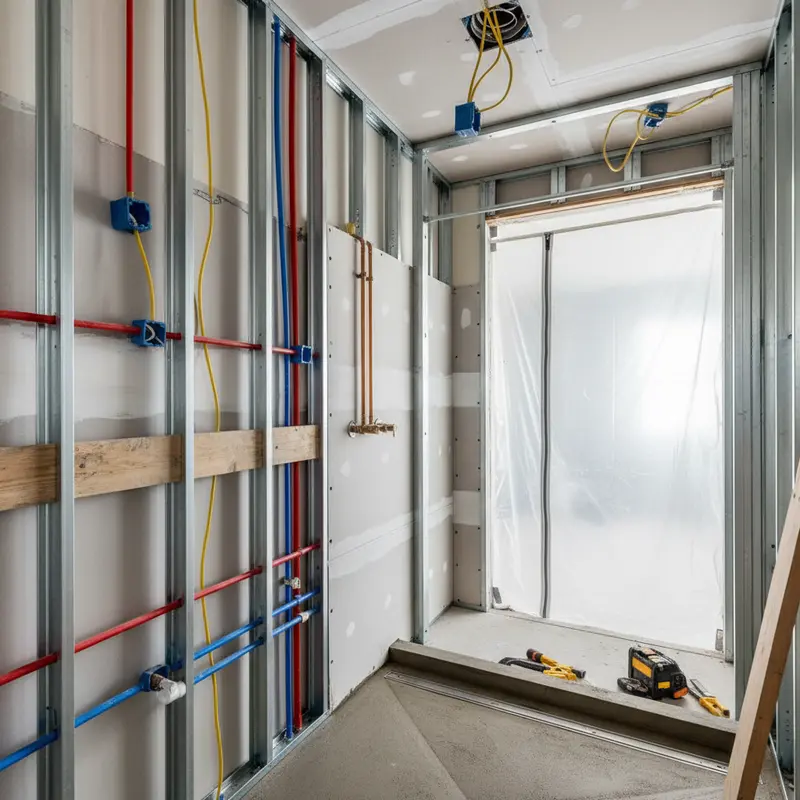
Days 1-2: Site protection and demolition. We seal off the work area with plastic barriers and set up HEPA filtration for dust control — especially important in pre-1980s Sacramento homes where lead paint or asbestos may be present. Old tub, shower, vanity, toilet, tile, and drywall come out. For a full gut, demo takes 1-2 full days. A cosmetic update may only need half a day.
Days 3-5: Rough-in plumbing, electrical, and framing. New supply lines and drain pipes are installed or relocated (1-3 days). Electrical wiring goes in for lighting, exhaust fan, GFCI outlets, and any heated flooring (1-3 days). If you're adding a shower niche, moving walls, or installing blocking for grab bars, framing happens now (1-2 days). Some of this work overlaps.
Day 5-6: First inspection. Rough-in plumbing and electrical must pass city or county inspection before walls are closed up. Inspector scheduling typically takes 1-3 business days in the Sacramento area. A failed inspection means rework and rescheduling — another reason to hire experienced tradespeople.
Week 2: Infrastructure and Waterproofing
Days 7-9: Subfloor work and shower pan. If the subfloor has damage (common under old tubs), it gets repaired or replaced. The shower pan or curbless shower base is built — this involves a mortar bed, pre-slope, waterproofing membrane, and a liner or drain assembly. This is precision work that can't be rushed.
Days 9-11: Waterproofing and backer board. Liquid-applied waterproofing membrane goes on the shower walls and floor. It needs 24-48 hours to cure before tile can be installed. Cement backer board goes up on all surfaces receiving tile. Insulation and new drywall are installed on non-tiled walls.
Day 12: Shower pan inspection. Many jurisdictions require a separate inspection of the waterproofing and shower pan before tiling. Schedule this promptly to avoid losing days.
Week 3: Tile Installation
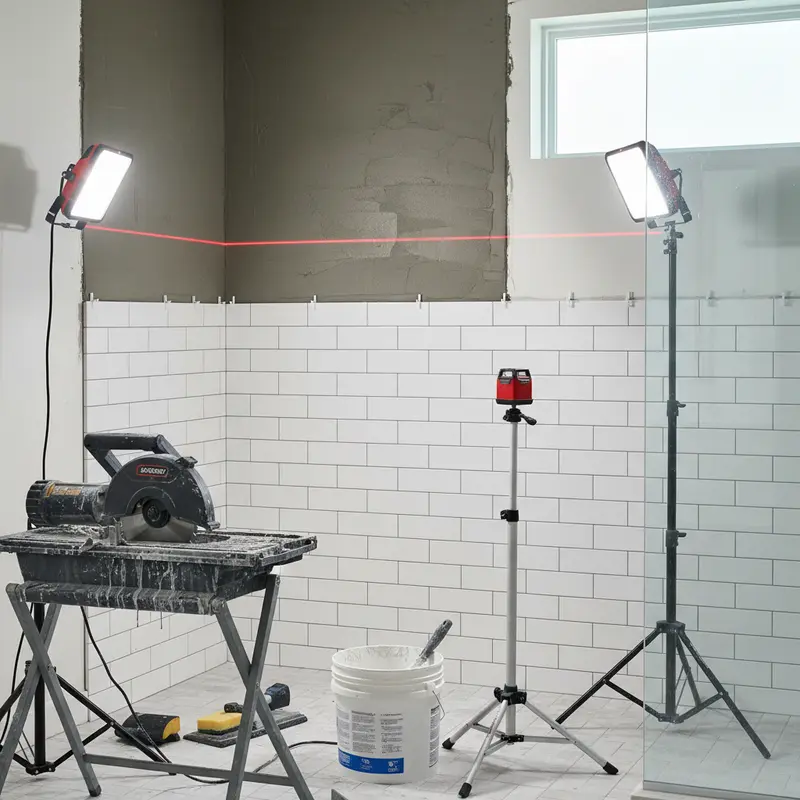
Tile work is the single longest trade phase in most bathroom remodels — and it's the one homeowners most consistently underestimate. Depending on the design complexity, tile installation takes 5-10+ days.
Days 13-16: Shower wall tile. This takes 2-4 days for a standard shower. Large-format tiles go faster; small mosaics, intricate patterns, and accent bands take longer. Every cut must be precise, and thinset mortar needs time to set between sessions.
Days 16-18: Floor tile and shower floor. Bathroom floor tile takes 1-3 days depending on room size and tile format. The shower floor (typically small mosaic tile for drainage slope) adds another day.
Days 19-20: Grouting and cure time. Grout goes in after all tile is set and cured. Then the grout itself needs 24-48 hours to cure before any moisture exposure. This cure time is non-negotiable — rushing it leads to cracking, staining, and failures.
Why does tile take so long? Each layer requires drying time between steps: mortar bed, waterproofing, thinset, and grout all need to cure separately. Small-format tiles like penny rounds or mosaics take 2-3 times longer to install than large-format tiles because of the number of individual pieces and grout lines.
Week 4+: Final Finishes and Completion
Day 21: Painting. Walls and ceiling get painted. We use moisture-resistant paint rated for bathroom environments. One day for most bathrooms.
Days 22-23: Plumbing and electrical finish. Faucets, showerhead and valves, toilet, drain covers, light fixtures, exhaust fan, switches, and outlets are all connected. This is called "trim-out" work.
Day 24: Vanity, mirror, and accessories. Vanity installation, countertop mounting (if prefab — stone countertops were templated and fabricated during earlier weeks), mirror hanging, towel bars, toilet paper holder, robe hooks, and other accessories.
Day 25: Glass shower door. If you're getting a frameless glass door, it's measured after tile is complete and typically installed 5-10 business days later. This is a common end-of-project wait — plan for it.
Day 26: Final inspection. The building department conducts a final inspection covering all permitted work — plumbing, electrical, and structural. This confirms everything meets California building code.
Day 27-28: Punch list and cleanup. We do a detailed walkthrough with you to identify anything that needs adjustment: paint touch-ups, caulk refinement, fixture alignment, grout haze removal. Most punch list items are resolved in 1-2 days.
What Happens After Construction Wraps Up?
Post-construction takes 1-3 days and includes three important steps that homeowners sometimes overlook.
- Final walkthrough and punch list review. Walk every inch of the bathroom with your contractor. Test every fixture — flush the toilet, run the shower, check water pressure, open and close drawers, test lighting and exhaust fan. Document anything that needs correction.
- Final payment and lien release. Once punch list items are resolved and you're satisfied with the work, process the final payment. In California, request a Conditional Waiver and Release on Final Payment from your contractor — this protects you from any future mechanics' liens.
- Warranty documentation. Get written documentation of all warranties: labor warranty from your contractor, manufacturer warranties on fixtures and materials, and any extended warranties on items like shower doors or heated flooring systems. File these where you can find them.
What Are the 8 Biggest Factors That Affect Your Timeline?
Not every bathroom remodel takes the same amount of time. These eight factors create the biggest swings in project duration.
1. Scope of Work
A cosmetic refresh (paint, fixtures, vanity swap) takes 1-2 weeks. A layout change with plumbing relocation takes 6-10 weeks. A full gut with structural work takes 8-14 weeks. Scope is the single biggest timeline variable. Our ultimate guide to bathroom remodeling in Sacramento covers all scope levels in detail.
2. Bathroom Size and Complexity
Custom features add time: heated floors need an extra day of installation and a dedicated electrical circuit. Steam showers require vapor barriers and specialized plumbing. Zero-threshold curbless entries need precise subfloor modification. Each specialty feature can add 1-3 days to the schedule.
3. DIY vs. Professional vs. Shared Contractor
There's a third option most articles don't mention: a shared contractor. Some contractors juggle multiple jobs simultaneously, sending crews to different sites on different days. A dedicated contractor — one whose crew is at your project every working day — finishes significantly faster. Always ask: "Will your crew be on my job every day or splitting time with other projects?"
4. Material Lead Times
Stock materials arrive in days. Custom or specialty items take weeks to months. Custom cabinetry (6-12 weeks), imported tile (3-6 weeks), and stone countertops (2-4 weeks) are the most common long-lead items. Order early — ideally before construction starts.
5. Permit and Inspection Delays
Permit processing in the Sacramento metro area ranges from same-day counter permits to 8 weeks for complex projects. Failed inspections add 3-7 days for rework and rescheduling. Experienced contractors submit complete applications and build to code the first time — both of which speed up the permit timeline. For Sacramento-specific permit details, see our bathroom remodel timeline guide.
6. Surprises Behind the Walls
Industry estimates suggest 40-60% of bathroom remodels uncover unforeseen conditions: water damage from old shower pans, corroded pipes, outdated wiring, mold, or subfloor rot. Each issue adds 3-10 days depending on severity. Pre-1990s Sacramento homes are particularly prone to galvanized pipe corrosion and outdated electrical.
7. Number of Contractors and Coordination
A bathroom remodel involves 5-8 different trades: demolition, plumbing, electrical, framing, waterproofing, tile, painting, and glass. If your general contractor manages dedicated subcontractors who show up on schedule, work flows smoothly. If scheduling falls apart between trades, you lose days waiting for the next crew.
8. Season and Local Demand
Three in four homeowners decide on a master bathroom remodel in the first half of the year, with most projects starting in early summer (HIRI, 2024). That seasonal pattern means peak-season projects (May-September) face longer wait times to get on the schedule and tighter subcontractor availability. Off-peak season (October-February) offers better availability and faster starts.
Should You DIY or Hire a Professional?
According to the 2025 U.S. Houzz Bathroom Trends Study, 84% of homeowners hire professionals for bathroom renovations. There are good reasons — but DIY has its place too.
When DIY Makes Sense
- Cosmetic updates only: Painting, replacing a mirror, swapping light fixtures, installing a new toilet, or adding accessories. These are weekend projects that don't require permits or specialized skills.
- Vanity replacement (same location): If the plumbing connections don't move and you're comfortable with basic plumbing hookups, a vanity swap is manageable.
- Simple flooring: Luxury vinyl plank or peel-and-stick tile over an existing solid subfloor is a realistic DIY project.
When to Hire a Professional
- Plumbing relocation: Moving drain lines or supply pipes requires a licensed plumber in California and a permit. Improper plumbing causes water damage that costs far more than hiring a pro.
- Electrical work: New circuits, GFCI outlets, exhaust fans, and lighting changes require a licensed electrician and electrical permit. Bathroom electrical work is safety-critical due to the water environment.
- Tile installation (shower): Shower tile work requires proper waterproofing, slope, and precision. A poorly waterproofed shower will leak within months, causing structural damage behind the walls.
- Structural changes: Removing or modifying walls, enlarging doorways, or changing the floor plan requires engineering review and permits. This is not DIY territory.
- ADA or accessibility remodels: Zero-threshold showers, grab bar blocking, and accessibility features require precise installation that meets California Title 24 requirements. See our ADA bathroom remodeling guide for details.
The Myth of the "One-Day Bathroom Remodel"
You've probably seen ads promising a bathroom remodel in one day. These are almost always acrylic liner or tub surround installations — a shell placed over your existing tub and walls. It's a cosmetic cover-up, not a remodel. The old surfaces, plumbing, and any hidden damage remain untouched underneath. For some homeowners, it's a fine short-term solution. But it's not the same as a real renovation, and calling it a "remodel" is misleading.
What Are the Most Common Delays and How Do You Avoid Them?
A national survey found that 41% of homeowners experienced significant delays in their last renovation, and 58% say renovations consistently exceed their time expectations (Clever Real Estate, 2024). Here are the six most common delay causes and how to prevent each one.
Late Design Decisions
Changing your tile, fixture finish, or layout after construction starts triggers a cascade: reordering materials (days to weeks), repricing the scope (change order), and potentially reworking completed phases. The fix: make every single design decision before demo day. Every tile, every fixture, every paint color, every piece of hardware — locked in and ordered.
Permit Bottlenecks
Waiting until you're "ready to build" to apply for permits wastes weeks. The fix: submit permit applications during the design phase. By the time design and material ordering are complete, your permit should be approved or nearly so.
Material Backorders
A tile that was in stock when you selected it may be backordered when you order it three weeks later. The fix: order all materials as soon as selections are finalized. Identify backup options for critical items. We keep our material suppliers' inventory availability updated in real time.
Mid-Project Scope Changes
"While you're at it, can we also add heated floors?" Scope creep is natural — seeing the open walls makes homeowners think of improvements they hadn't considered. Industry data suggests change orders occur in 50-70% of projects, each adding 2-7 days. The fix: if you want to add scope, understand the time and cost impact fully before committing. Sometimes it makes sense. But go in with eyes open.
Communication Gaps
Your contractor asks a question about fixture placement. You don't respond for three days. The crew can't proceed, so they move to another job. Now you're waiting for them to come back. The fix: be responsive during construction. Questions will come up — a quick decision keeps the crew productive.
Contractor Availability
The construction industry faces a 439,000-worker shortage nationally in 2025, with 499,000 projected for 2026 (Associated Builders and Contractors). In California, electricians, plumbers, and low-voltage specialists are the three highest-demand trades. The fix: book your contractor early. If you're planning a summer remodel, start the conversation in winter. A contractor with a 2-3 month waitlist is usually a sign of quality, not a reason to look elsewhere.
Your Bathroom Remodel Planning Checklist
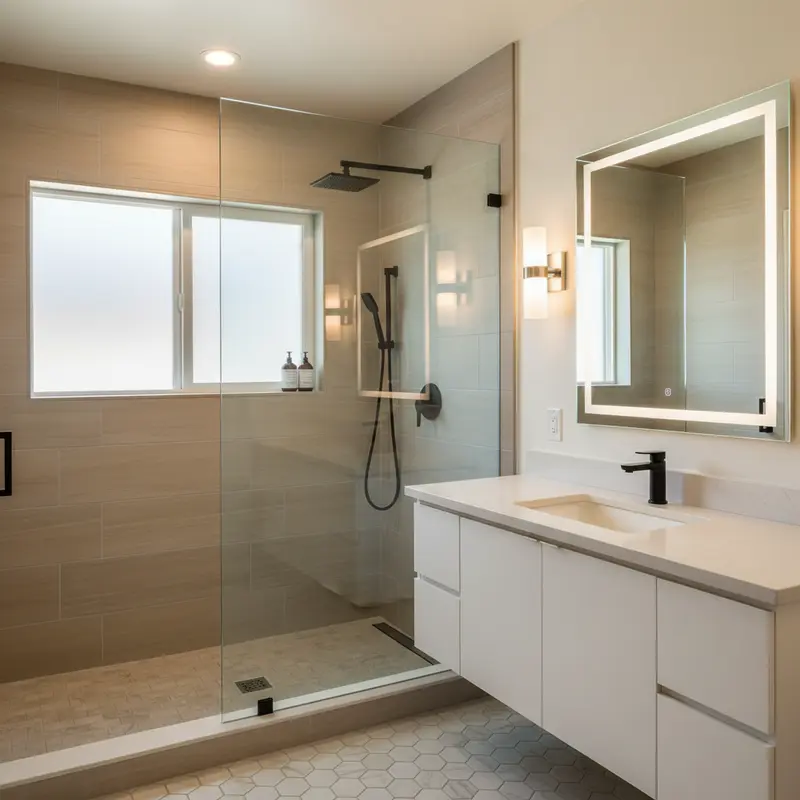
No competitor offers a comprehensive planning checklist — so here's one. Use this to track every decision and milestone from first idea to finished bathroom.
Planning Phase (4-8 Weeks Before Construction)
- Define your goals: What's driving the remodel? Updating outdated aesthetics, improving function, adding accessibility, increasing home value?
- Set your budget: Total budget including 10-15% contingency. Use our bathroom remodel calculator for Sacramento-area pricing.
- Research contractors: Get 3+ bids, verify CSLB licenses, check references, review portfolios.
- Select your contractor: Sign a detailed contract with scope of work, timeline, payment schedule, and warranty terms.
- Schedule an in-home design consultation: Measure space, discuss layout, review material options.
Design and Ordering Phase (3-6 Weeks Before Construction)
- Finalize layout and design: Approve floor plan, elevations, and 3D renderings.
- Select all materials: Tile (floor and walls), vanity/cabinetry, countertop, fixtures, hardware, paint colors, lighting, mirror, accessories.
- Order long-lead items: Custom vanities, specialty tile, stone countertops, glass shower doors (measurements come later, but order the glass type/finish now).
- Submit permit application: Don't wait — submit as soon as the design is finalized.
- Identify backup materials: Choose alternates for your top 3 most critical selections in case of backorders.
Pre-Demo Prep (1 Week Before Construction)
- Clear out the bathroom: Remove all personal items, towels, toiletries, decorations.
- Plan your alternative bathroom: Portable restroom, gym membership, neighbor or family arrangement.
- Protect adjacent areas: Move furniture away from the bathroom access path.
- Confirm material deliveries: Verify that all ordered materials have arrived or have confirmed delivery dates.
- Discuss construction schedule: Confirm work hours, parking for contractor vehicles, and communication preferences.
During Construction
- Be responsive: Answer contractor questions within 24 hours to keep the schedule moving.
- Avoid mid-project changes: Every change adds time and cost. If something must change, get a written change order with time and cost impact before approving.
- Attend inspections: You don't have to — but it's helpful to understand what inspectors are checking.
- Document progress: Take photos at each major phase for your records.
Post-Construction
- Do a thorough walkthrough: Test every fixture, check every surface, open every drawer.
- Create and resolve punch list: Document any issues and confirm completion.
- Process final payment: Only after punch list is resolved to your satisfaction.
- Collect warranty documentation: Labor warranty, manufacturer warranties, permit sign-offs.
- Leave a review: Honest feedback helps future homeowners and supports quality contractors.
For more Sacramento-specific planning insights including permit details and seasonal timing, see our bathroom remodel timeline for Sacramento homeowners.
Pros
- Realistic Expectations Prevent Frustration: Understanding the actual timeline — not the TV-show version — lets you plan your life around the remodel instead of being caught off guard.
- Planning Is the Single Biggest Lever: Homeowners who finalize all decisions before construction starts experience fewer delays, lower costs, and better outcomes.
- Professional Crews Are 2-4x Faster: Hiring experienced tradespeople compresses a 4-month DIY project into 4-6 weeks with better quality and code compliance.
- Off-Peak Scheduling Saves Time and Money: Booking your remodel during Sacramento's October-February off-season gets you on the calendar faster with more flexible scheduling.
- Fixed-Price Contracts Eliminate Surprises: A detailed, fixed-price proposal locks in your cost and timeline, protecting you from the budget overruns that 78% of homeowners experience.
- Phased Material Ordering Prevents Delays: Ordering long-lead items during the design phase means materials arrive before or during construction, keeping crews productive every day.
Cons
- Total Timelines Are Longer Than Expected: The 3-8 week construction phase is only part of the story. Total project timelines typically run 2-5 months including planning, permits, and material ordering.
- Hidden Conditions Are Unpredictable: 40-60% of projects discover hidden issues (water damage, bad wiring, corroded pipes) that add 3-10 days. No amount of planning eliminates this possibility entirely.
- DIY Projects Take 2-4x Longer: If you're planning to DIY, be realistic — a project that takes a crew 4 weeks will take you 8-16 weeks working evenings and weekends.
- Labor Shortages Affect Availability: The construction industry's 439,000-worker shortage means contractors book further out than they did even two years ago. Start your search early.
- One-Bathroom Homes Face Real Inconvenience: Losing your only bathroom for 3-8 weeks requires advance planning for alternative arrangements — portable restroom, gym, or temporary housing.
- Peak Season Means Longer Waits: If you want a summer remodel in Sacramento, you may need to book 2-3 months in advance to get on the schedule.
Frequently Asked Questions
A small bathroom or powder room refresh typically takes 1-2 weeks of construction and 4-6 weeks total including planning. This covers cosmetic updates like a vanity swap, new mirror, updated lighting, and fresh paint. If you're replacing tile or converting a tub to a shower, expect 3-5 weeks of construction.
A master bathroom remodel takes 5-8 weeks of construction for a moderate scope (walk-in shower, double vanity, new tile, updated fixtures). A full gut renovation with layout changes, plumbing relocation, and custom features takes 8-14 weeks of construction. Total project timelines including planning and permits run 3-7 months.
A genuine bathroom remodel cannot be completed in one week. Companies advertising "one-day remodels" are typically installing acrylic liners or tub surrounds over existing surfaces — not performing actual renovation work. The plumbing, electrical, waterproofing, and tile work alone require more time than one week allows. The fastest real remodeling project — a simple tub-to-shower conversion — takes 1-2 weeks minimum.
Professional contractors complete bathroom remodels 2-4 times faster than DIY. A guest bathroom that takes a contractor's crew 4 weeks might take a skilled DIYer 8-16 weeks working evenings and weekends. The difference comes from crew size, specialized tools, trade coordination, full-day scheduling, and experience. According to Houzz, 84% of homeowners hire professionals for bathroom renovations.
Tile installation is the single longest trade phase in most bathroom remodels, taking 5-10+ days depending on design complexity. Each layer — mortar bed, waterproofing membrane, thinset, tile, and grout — requires separate drying and cure times. Small-format tiles like mosaics or penny rounds take 2-3 times longer to install than large-format tiles due to the number of individual pieces.
In California, you need a building permit for any bathroom remodel that involves plumbing changes, electrical modifications, or structural alterations. Cosmetic updates like painting, replacing a vanity in the same location, or swapping fixtures may not require a permit. Working without required permits means your work isn't inspected for safety, and unpermitted work can create serious problems when selling your home.
October through February is the best time to start a bathroom remodel in the Sacramento area. Contractors have more availability during the off-season, scheduling is more flexible, and you'll get on the calendar faster. Since bathroom remodels happen entirely indoors, winter rain doesn't affect the work. Start planning in fall, finalize materials in winter, and begin construction in late winter or early spring.
Bathroom remodels in the Sacramento area range from $8,000 for a tub-to-shower conversion to $75,000+ for a full master suite renovation. Guest bathrooms typically cost $12,000-$35,000 and master bathrooms $25,000-$75,000. Budget an additional 10-15% contingency for hidden conditions discovered during demolition.
Myths & Misconceptions
You can remodel a bathroom in a single weekend if you work fast enough.
Even cosmetic updates take longer than a weekend when you account for proper preparation, drying times, and installation precision. A simple vanity replacement involves disconnecting plumbing, removing the old unit, possibly repairing the wall or floor underneath, installing the new vanity, reconnecting plumbing, and applying caulk that needs to cure. Tile work requires 24-48 hours of drying time between steps. Rushing any of these steps leads to failures that cost far more to fix than the time you "saved."
A good contractor can start next week — if they're booked out months, they must be overpriced.
The construction industry faces a 439,000-worker shortage nationally (ABC, 2025). In California, 83% of construction companies report declining potential projects due to staffing shortages. A contractor with a 2-3 month waitlist isn't overpriced — they're in demand because of quality work. Contractors who can start immediately may have availability for a reason: canceled projects, dissatisfied clients, or insufficient workload to sustain a full crew.
Permits are optional for bathroom remodels since you're not changing the home's footprint.
Permits aren't about square footage — they're about safety. California building code requires permits for plumbing changes, electrical modifications, and structural alterations regardless of whether you're adding space. Working without permits means dangerous conditions go uninspected, your homeowner's insurance may not cover damages, and you'll face disclosure issues when selling. In Sacramento and Placer counties, most bathroom remodels beyond cosmetic updates require a permit.
Summary
A bathroom remodel takes 3-8 weeks of active construction — but the total timeline from first consultation to final walkthrough typically runs 2-5 months when you include design, material ordering, and permits. The biggest timeline variables are scope of work, material lead times (custom vanities need 6-12 weeks), permit processing (2-6 weeks in Sacramento), and hidden conditions behind the walls. Whether you're tackling a quick powder room refresh or a full master suite renovation, the single most effective thing you can do is finalize every design decision and order all materials before demo day. That one habit prevents more delays than any other strategy.
About Western Renovations
Western Renovations is a family-owned bathroom and kitchen remodeling company based in Roseville, California. With over 28 years of combined experience and 358+ completed projects, we specialize in shower installations, bathroom remodeling, ADA-accessible conversions, tub-to-shower conversions, kitchen remodeling, and ADU construction. We serve 15+ cities across the Sacramento metro area and maintain a 5.0-star Google rating. Contact us at (916) 200-9435 for a free estimate.


